
Share this product :
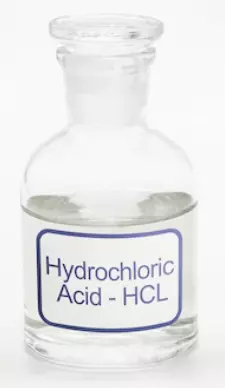
Hydrochloric Acid (33%) - India
- Origin
- : India
- CAS Number
- : 7647-01-0
- HS Code
- : 2806.10.00
Basic Info
- IUPAC Name
- : hydrochloric acid solution
- Molecular Formula
- : HCl (aqueous)
- Molecular Weight (g/mol)
- : 36.4600
- Synonyms & Trade Names
- : Hydrochloric acid; Muriatic acid; HCl solution
- Purity / Assay (%)
- : 33% min
- Grade / Quality Level
- : Industrial Grade
- Physical Form
- : Liquid
- Concentration
- : Pure substance
- Appearance / Color
- : Clear to slightly colored liquid
- Odor
- : Pungent acid
- Boiling Point (°C)
- : 48 (at 20.2%)
- Density (g/cm³)
- : 1.1620
- Solubility in Water
- : Miscible
- Signal Word
- : Danger
- UN Number
- : 1789
- GHS Hazard Class
- : Acute toxic; Skin corrosive; Eye corrosive
- H-Statements
- : H290|H314|H335
- P-Statements
- : P234|P260|P264|P271|P273|P280|P301+P330+P331
- REACH Status
- : Registered
- Drug Precursor Status
- : Non-precursor
- Storage Class (GHS)
- : 8
- Storage Conditions
- : Cool, ventilated; corrosive; away from alkalis
Categories
Share this product :
Brief Overview
Hydrochloric acid is a clear, colorless, highly pungent solution of hydrogen chloride (HCl) in water. It is a highly corrosive acid with many industrial uses. It is a monoprotic acid and is less likely to undergo an interfering oxidation-reduction reaction than other industrial acids. Despite its acidity, it is one of the least hazardous strong acids to handle, as it contains the non-reactive and non-toxic chloride ion. Intermediate-strength hydrochloric acid solutions are quite stable upon storage, and their concentrations are maintained over time. These attributes, together with the fact that it is available as a pure reagent, make hydrochloric acid an excellent acidifying reagent.
Manufacturing Process
The simplest method for producing Hydrochloric Acid is direct synthesis from the elements, hydrogen (H) and chlorine (Cl), which yields a very pure product. Industrial production involves the use of a burner. Chlorine and hydrogen are fed by separate concentric tubes into the combustion chamber. After ignition, the chlorine burns in the hydrogen at more than 2000∘C. A cooling section is connected to the combustion chamber to collect the hydrogen chloride formed.