
Share this product :
Calcium Hydroxide - Vietnam
- Origin
- : Vietnam
- CAS Number
- : 1305-62-0
- HS Code
- : 2522.20.00
Basic Info
- IUPAC Name
- : calcium dihydroxide
- Molecular Formula
- : Ca(OH)2
- Molecular Weight (g/mol)
- : 74.0900
- Synonyms & Trade Names
- : Calcium hydroxide; Slaked lime; Hydrated lime; E526
- Purity / Assay (%)
- : 95% min
- Grade / Quality Level
- : Industrial Grade
- Physical Form
- : Solid
- Concentration
- : Pure substance
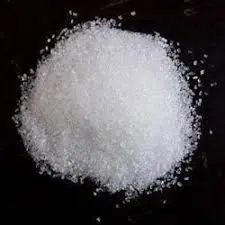
- Appearance / Color
- : White to off-white solid
- Odor
- : Odorless
- Density (g/cm³)
- : 2.2110
- Solubility in Water
- : Slightly soluble (0.16g/100mL)
- Signal Word
- : Warning
- GHS Hazard Class
- : Skin irritant; Eye irritant; Respiratory irritant
- H-Statements
- : H315|H318|H335
- P-Statements
- : P260|P261|P264|P271|P280|P305+P351+P338
- REACH Status
- : Registered
- Drug Precursor Status
- : Non-precursor
- Storage Class (GHS)
- : 10
- Storage Conditions
- : Cool, dry; sealed; away from CO2
Categories
Share this product :
Brief Overview:
Since calcium hydroxide easily combines with water to generate hydrated lime and carbon dioxide to form limestone, it can be found in nature as the mineral portlandite, though it is mainly produced industrially. Because this process is exothermic and generates a lot of heat, care must be given. The homogeneity of the matrix and the degree of crystalline mass cohesion and crystallization varies between calcium oxides.
Manufacturing Process:
Method 1: Calcium chloride is produced by reacting calcium carbonate with hydrochloric acid. Ammonia is then added for neutralization and let to stand until precipitation happens. After filtering the mixture, sodium bicarbonate is added to produce a precipitate of calcium carbonate.
Method 2: Burnt lime, or calcium oxide, is produced by thermally breaking down calcium carbonate at a higher temperature. To make calcium hydroxide on a commercial basis, calcium oxide is further processed or slaked with water:
CaO + H2O → Ca(OH)2
In this hydration reaction, which takes place in a continuous hydrator, the calcium oxide is broken down into tiny particles of calcium hydroxide. To guarantee uniform particle size, the sizes can be changed via milling.