
Share this product :
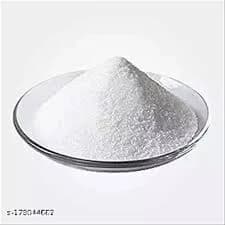
Calcium Oxide - Vietnam
- Origin
- : Vietnam
- CAS Number
- : 1305-78-8
- HS Code
- : 2522.10.00
Basic Info
- IUPAC Name
- : calcium oxide
- Molecular Formula
- : CaO
- Molecular Weight (g/mol)
- : 56.0800
- Synonyms & Trade Names
- : Calcium oxide; Quicklime; Burnt lime; Unslaked lime
- Purity / Assay (%)
- : 90% min CaO
- Grade / Quality Level
- : Industrial Grade
- Physical Form
- : Solid
- Concentration
- : Pure substance
- Appearance / Color
- : White to off-white solid
- Odor
- : Odorless
- Melting Point (°C)
- : 2613.0000
- Boiling Point (°C)
- : 2613
- Density (g/cm³)
- : 3.3500
- Solubility in Water
- : Reacts with water
- Signal Word
- : Danger
- UN Number
- : 1910
- GHS Hazard Class
- : Skin corrosive; Eye corrosive; Respiratory irritant
- H-Statements
- : H290|H314|H318|H335
- P-Statements
- : P234|P260|P264|P271|P273|P280|P301+P330+P331
- REACH Status
- : Registered
- Drug Precursor Status
- : Non-precursor
- Storage Class (GHS)
- : 8
- Storage Conditions
- : Keep dry; protect from CO2 and moisture
Categories
Share this product :
Brief Overview
Calcium oxide (CaO), also known as quicklime or burnt lime, is a highly corrosive and alkaline white crystalline solid at room temperature. Being an inexpensive compound to produce, along with calcium hydroxide, they are important chemicals for numerous industries. Calcium oxide has a melting point of 2570℃ (4658℉) and a boiling point of 2850℃ (5162℉). Calcium oxide dissolves in water to produce calcium hydroxide, an alkaline solution with a chemical formula of Ca(OH)2, also known as hydrated lime.
Manufacturing Process
Calcium oxide is produced by thermal decomposition of calcium carbonate of calcium carbonate materials such as limestone in a lime kiln. The limestone is first mined and then crushed and washed, removing the impurities. The material is heated during calcination or lime burning, releasing carbon dioxide and leaving behind quicklime. This reaction is reversible and quicklime can react with carbon dioxide to convert back to calcium carbonate. Therefore, carbon dioxide is readily removed to prevent the conversion back to calcium carbonate.