
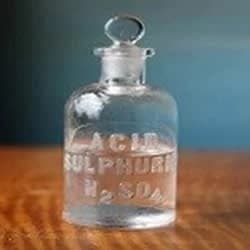
Share this product :
Sulphuric Acid (60%)
- Origin
- : Indonesia
- CAS Number
- : 7664-93-9
- HS Code
- : 2807.00.00
Basic Info
- IUPAC Name
- : sulfuric acid
- Molecular Formula
- : H2SO4
- Molecular Weight (g/mol)
- : 98.0800
- Synonyms & Trade Names
- : Sulphuric acid; Sulfuric acid; Oil of vitriol; Battery acid
- Purity / Assay (%)
- : 60% min
- Grade / Quality Level
- : Industrial Grade
- Physical Form
- : Liquid
- Concentration
- : Pure substance
- Appearance / Color
- : Clear to slightly colored liquid
- Odor
- : Pungent
- Melting Point (°C)
- : 10.0000
- Boiling Point (°C)
- : 337
- Density (g/cm³)
- : 1.8400
- Solubility in Water
- : Miscible (exothermic)
- Signal Word
- : Danger
- UN Number
- : 1830
- GHS Hazard Class
- : Skin corrosive; Eye corrosive; Respiratory irritant
- H-Statements
- : H290|H314|H318|H335
- P-Statements
- : P234|P260|P264|P271|P273|P280|P301+P330+P331
- REACH Status
- : Registered
- Drug Precursor Status
- : Non-precursor
- Storage Class (GHS)
- : 8
- Storage Conditions
- : Cool; away from water, metals, alkalis; corrosive
Categories
Share this product :
Brief Overview
Sulphuric acid, also known as Hydrogen Sulphate, is classified as diprotic acid and strong acid with molecular formula H2SO4. The physical properties of sulphuric acid are colorless to slightly yellow liquid. It was known as the oil of vitriol. Sulphuric acid is very soluble in water in every concentration. Sulphuric acid does not occur in nature in anhydrous form because of its hygroscopic properties, which can absorb water vapor from the air. Sulphuric acid formed in nature by the oxidation reaction of sulfide minerals.
Manufacturing Process
The manufacturing process of sulphuric acid is using the Chamber process only produced approximately 65% concentration. There are several methods of manufacturing sulphuric acid as follows:
Contact Process
This is the most common manufacturing process in the industry because the sulphuric acids that obtain from this process are in high concentration and also less expensive than other methods. The contact process also used for fuming sulphuric acid from sulphur dioxide. This process is occurring by roasting sulphide ores or burning sulphur with oxygen in the presence of vanadium (V) oxide catalyst and classified as an exothermic reaction. This method comprises four steps:
i. Producing sulphur dioxide by burning sulphur S(s) + O2(g) = SO2(g)
ii. Oxidation reaction of sulphur dioxide to produce sulphur trioxide 2SO2(g) + O2(g) = 2SO3(g) (V2O5 Catalyst)
iii. Absorption of sulphur trioxide into H2SO4 (97-98 %) to produce oleum (H2S2O7(l)) H2SO4(l) + SO3(g) = H2S2O7(l)
iv. Dilution of oleum with water to produce sulphuric acid in a certain concentration H2S2O7(l) + H2O(l) = 2H2SO4(l) Wet Sulphuric Acid (WSA) Process WSA process is largely used in industry for recovering sulphur.
There are 4 main reactions in the WSA process, which is combustion, oxidation, hydration, and condensation. WSA process is classified as an exothermic reaction and the heat released by the reaction is used for the production of steam. The process of making sulphuric acid using the WSA process in the presence of vanadium (V) oxide catalyst is shown below:
i. Combustion: H2S + ½ O2 = H2O + SO2
ii. Oxidation: 2SO2(g) + O2(g) = 2SO3(g) (V2O5 Catalyst)
iii. Hydration: SO3 + H2O = H2SO4(g)
iv. Condensation: H2SO4(g) = H2SO4(l)
Metabisulfite Process
This method is using sodium metabisulfite or potassium metabisulfite as the main material for producing sulphuric acid. Metabisulfide is added with hydrochloric acid with a concentration of 12.6 molars and produces sulphur dioxide. The gas is bubbled through nitric acid, which will release brown/red vapors of nitrogen dioxide as the reaction proceeds. The completion of the reaction is indicated by the ceasing of the fumes.
SO2 + H2O2 = H2SO4