
Compartir este producto :
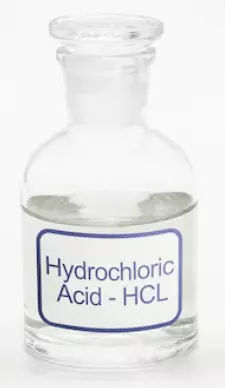
Ácido clorhídrico (33%) - India
- Origen
- : India
- Número CAS
- : 7647-01-0
- Código HS
- : 2806.10.00
Información básica
- IUPAC Name
- : hydrochloric acid solution
- Molecular Formula
- : HCl (aqueous)
- Molecular Weight (g/mol)
- : 36.4600
- Synonyms & Trade Names
- : Hydrochloric acid; Muriatic acid; HCl solution
- Pureza/ensayo (%)
- : 33% min
- Grade / Quality Level
- : Grado industrial
- Forma física
- : Líquido
- Concentration
- : Pure substance
- Appearance / Color
- : Clear to slightly colored liquid
- Odor
- : Pungent acid
- Boiling Point (°C)
- : 48 (at 20.2%)
- Density (g/cm³)
- : 1.1620
- Solubility in Water
- : Miscible
- Signal Word
- : Danger
- UN Number
- : 1789
- GHS Hazard Class
- : Acute toxic; Skin corrosive; Eye corrosive
- H-Statements
- : H290|H314|H335
- P-Statements
- : P234|P260|P264|P271|P273|P280|P301+P330+P331
- REACH Status
- : Registered
- Drug Precursor Status
- : Non-precursor
- Storage Class (GHS)
- : 8
- Storage Conditions
- : Cool, ventilated; corrosive; away from alkalis
Categorías
Compartir este producto :
Breve descripción
El ácido clorhídrico es una solución transparente, incolora y muy picante de cloruro de hidrógeno (HCl) en agua. Es un ácido altamente corrosivo con muchos usos industriales. Es un ácido monoprótico y es menos probable que sufra una reacción de oxidación-reducción interferente que otros ácidos industriales. A pesar de su acidez, es uno de los ácidos fuertes menos peligrosos de manipular, ya que contiene el ion cloruro no reactivo y no tóxico. Las soluciones de ácido clorhídrico de concentración intermedia son bastante estables durante el almacenamiento y sus concentraciones se mantienen a lo largo del tiempo. Estos atributos, junto con el hecho de que está disponible como reactivo puro, hacen del ácido clorhídrico un excelente reactivo acidificante.
Proceso de fabricación
El método más simple para producir ácido clorhídrico es la síntesis directa a partir de los elementos hidrógeno (H) y cloro (Cl), lo que produce un producto muy puro. La producción industrial implica el uso de un quemador. El cloro y el hidrógeno son alimentados por tubos concéntricos separados a la cámara de combustión. Tras la ignición, el cloro se quema en el hidrógeno a más de 2000 °C. Se conecta una sección de refrigeración a la cámara de combustión para recoger el cloruro de hidrógeno formado.